






New Thoughts, Tips, and Tricks for Wild Arms 4.
May 30, 2026
Paint the world red in Resident Evil Requiem.
June 29, 2026
I continue to be impressed by the Trails series the more I play. I also continue to be irritated by it. The interesting thing is that the things that impress me will simultaneously irritate me. The characters, setting, combat, presentation, and playtime all manage to give me mixed thoughts on the series. Clearly, the good mostly outweigh the bad since I keep coming back for more. Case in point: The Legend of Heroes: Trails into Reverie. This was my latest Trails excursion that was also the lengthiest; a whopping 90 hours of game time. I played this because web searches mentioned that this was the game to check out to see what happens to Lloyd Bannings and his friends in the SSS. The search results said more stuff that I should have taken to heart: to get the most out of Reverie, it’s a requirement to have played not only Trails to Azure and Trails from Zero, but also Cold Steel through Cold Steel IV. I didn’t finish the latter homework assignment so my experience with Reverie was chaotically mixed.
Before starting the game proper, players can read story summaries for Zero, Azure, and the Cold Steels. There’s also visual novelette titled 3X9 that serves to introduce you to a new, third main character in Reverie that I’ll cover in a minute. Trust and believe that I read and re-read the summaries for Cold Steel numerous times before starting. They didn’t help much. Those were hundred-hour games where the minutia was just as important as the major. Still, I hoped for the best. Initially, my hopes felt realized because beginning a new game has you taking control of Lloyd, Elie, Randy, Tio and…some chick from Cold Steel. We’re taken to Crossbell five months after the continental war. The SSS storm Ochres Tower with the mission of arresting rogue members of the IDF led by Dieter Crois. Crossbell is this close to becoming a free nation, but some bad apples continue to do anything in their power to prevent that. Their mission is a success, but after the battle, players see the camera pan out to a clandestine monitor that’s watching the events unfold. Someone or something is watching behind the scenes and is getting ready to unleash new terrors across the continent.
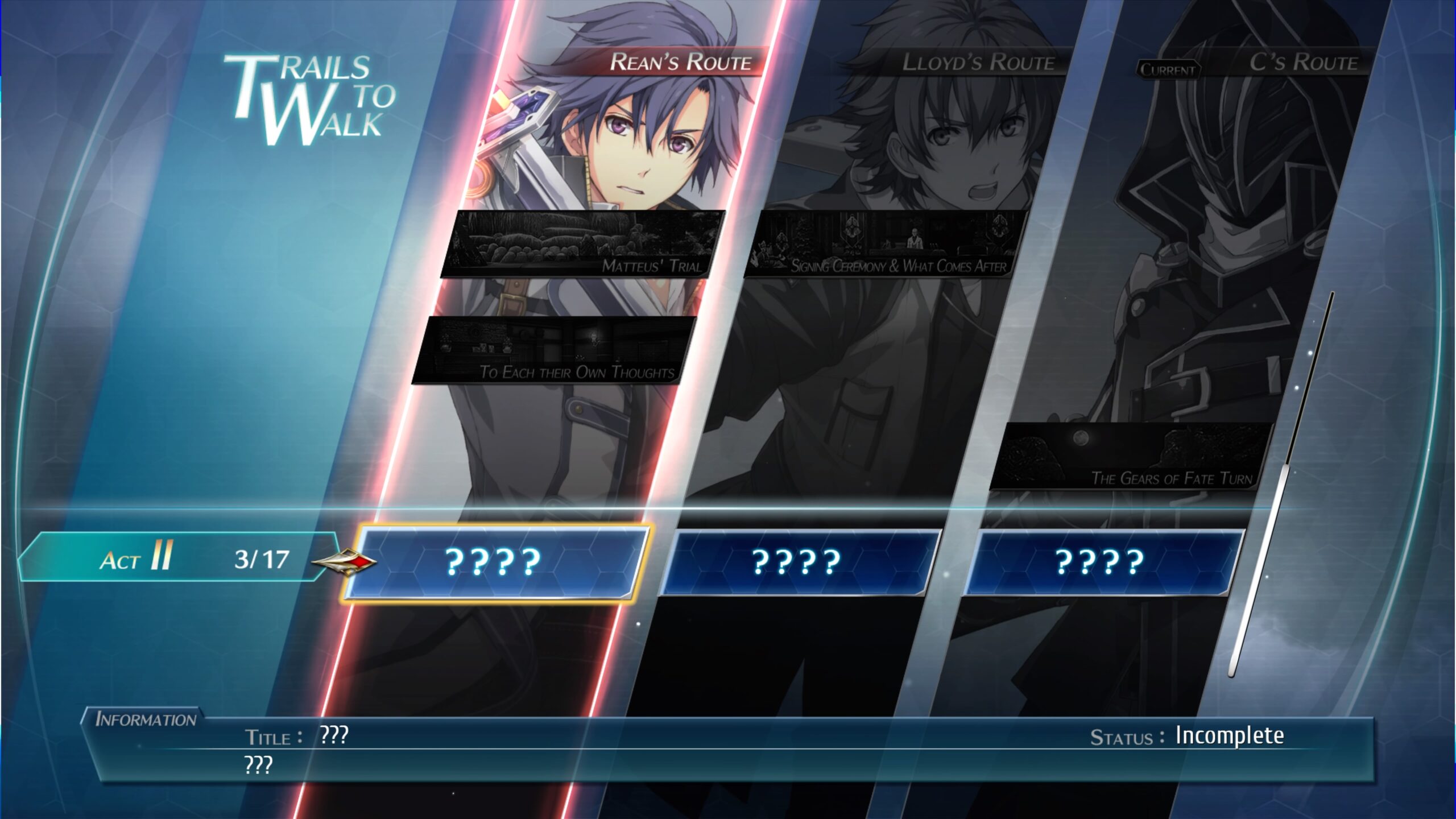
It’s eerie and ominous; a sign that things aren’t going to go smoothly for Lloyd and his team. Truthfully, the same can be said for the other two protagonists in Trails into Reverie. A neat feature in this game is Trails to Walk: the push of a button allows you to change vantage points between Lloyd, Rean, and the mysterious masked man that calls himself “C”. Trails to Walk lets you see the events going on for different characters during the same chunks of time. Fans of games like Suikoden III or Arc the Lad: Twilight of the Spirits will see some familiarity with this feature. RPG fans have likely surmised that the three paths converge. Rean’s first moments in Trails into Reverie show him and the New Class VII battling a powerful swordsman and Colonel Claire Rieveldt in the mountains of Ymir. (The reasons for this are explained later and it’s rather silly.) C’s introduction begins with the two leads from the aforementioned 3X9: Nadia and Swint. The pair are supposed to deliver a case to an unknown recipient, which turns out to be C. Inside the box is a Rosenburg doll named Lapis.
Once you finish the first chapters for Lloyd, Rean and C, an introduction movie plays, and things finally, finally begin. Personally speaking, the introduction took me a good ten hours. Some of that had to do with me fiddling with the battles and setting up my teammate’s equipment. I’ll cover combat soon, but hopefully my point is clear: Trails into Reverie’s long introduction is only the beginning of a massive and wordy Trails entry. My Trails MO is to go from story point to story point while picking up any side-quests and optional content along the way. I skip all non-story text and often skip the useless story text when folks begin to repeat themselves. I never speak to NPC’s unless required. In other words, I’m efficient. I have things to do and a continent to save. And still, getting all that I need to get done during the introductions took me ten hours. It’s quite remarkable when you think about it. Falcom and the dedicated team of translators really wanted to put as much text into the game as possible. Some people will gobble it up, and honestly, more power to them. If seeing every named character from a potentially 600 hours’ worth past games time give their two cents is their thing, then I’m happy for them. Heck, I might have been one of them if the game didn’t focus so much on Rean’s plights. Rean is dull, but the gigantic cast of characters must go through Rean for there to be any forward movement with the narrative. My point in all this is that Trails into Reverie is a prime example of a game that says too much while saying too little. As usual, to get to the good stuff you must read/skip the useless. Ultimately, it’s what will determine whether you can see the game to the end.
Normally I would offer the idea that gameplay could outweigh the story’s pace. If things move slowly in the narrative, then the activities to move it forward might help with the lulls. The staples of all things Trails are here: cooking, fishing, discovering optional quests to earn rewards, and so on. There’s plenty of items to find in treasures and shops. Equipment can be purchased, upgraded, and customized. The massive cast of characters means a massive number of options to build your team as you see fit. A reward exclusive to this game are Reverie Points. More RP means better rewards. Some of the best rewards will cost hundreds of RP. You spend them in The Reverie Corridor. The Reverie Corridor is massive dungeon. The series is usually big on narrative, and not so big with dungeons and exploration save for each game’s final dungeons. The Reverie Corridor is the game’s narrative equivalent in dungeon form; a sprawling and seemingly endless corridor that is used to level up, find better gear, find better Orbments, and unlock new scenarios that grant even more extras. With as many as 50 characters to use in battle, things can also feel overwhelming.
This brings me to the combat, which is overall a lot of fun, but the necessity of the Reverie Corridor and the required dungeon areas means too much of a good thing. I played the game on Normal, so battles usually ended swiftly. Bosses, of course, had their usual issue of too much HP and too many turns back-to-back. The massive cast can attack, defend, use Arts and Crafts, S-Crafts, and use items. The turn order is on constant display to allow players some strategy. There are some fun new features added to combat, too. The first are Brave Orders and Brave Points. Dealing and taking damage builds up the BP gauge. BP can be used to perform various follow-up attacks, but more importantly, they can be used to issue party-wide orders. These have a range of effects and perks. The best part about Brave Orders is that they activate immediately. There are also United Front attacks which require the use of a separate gauge called the Assault Gauge. These require at least five characters. The options with United Fronts allow you to essentially obliterate enemies or give your party full recovery. As things progress, most battles can be won in a jiffy thanks to some form of party-wide, all-out attack. It was fun to see so many faces come together at once to wipe out opposition.
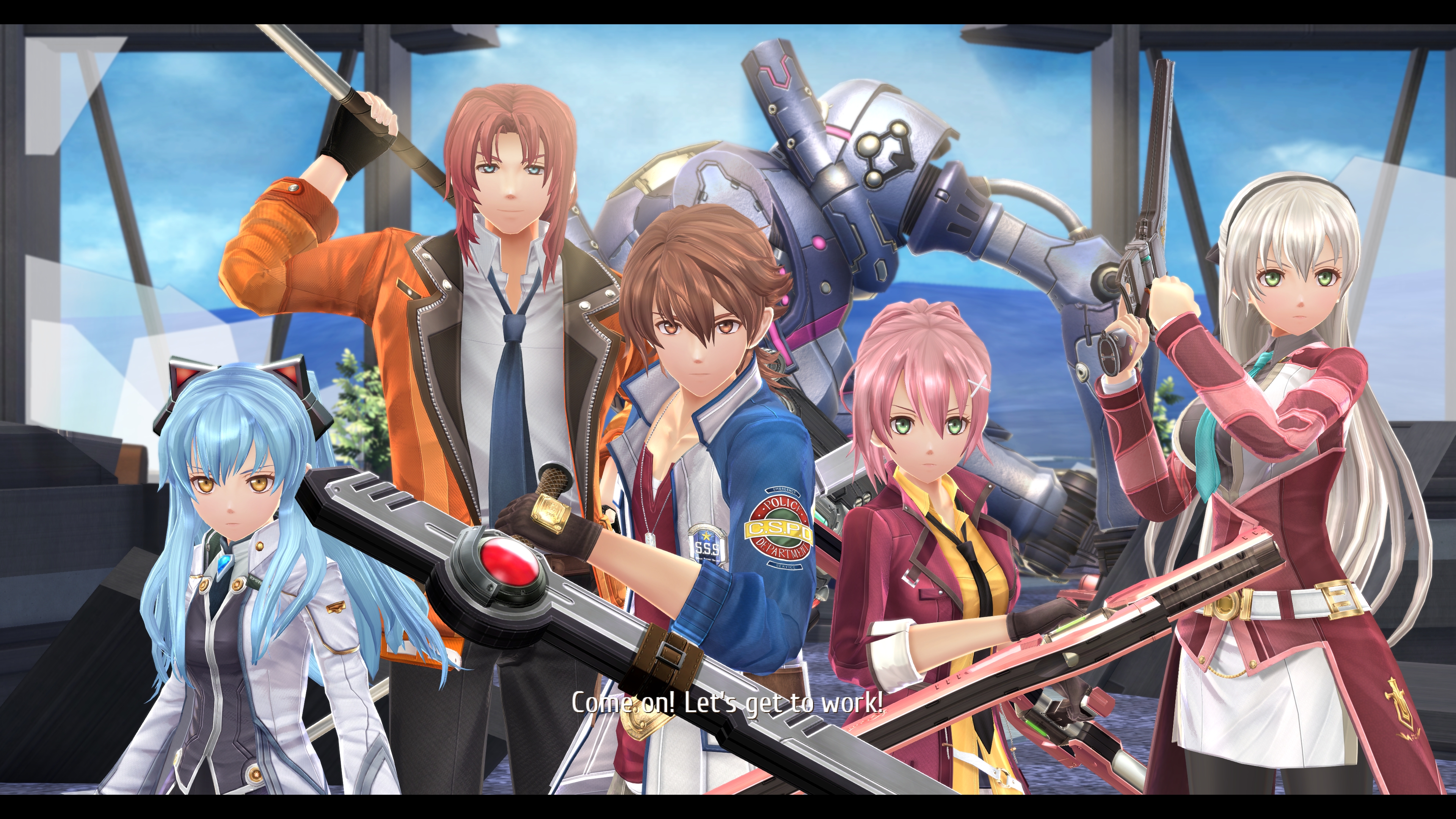
Most of my Trails experiences were in 2D. Trails into Reverie is a gorgeous game showcasing the capabilities of Falcom with 3D. I’ve played a bunch of modern games from Falcom so I’m used to their more lifelike 3D models. Still, I found myself missing the crisp and colorful sprites. I played the Switch version on my Switch 2 for the sake of portability and the game looked nice whether in handheld mode or docked mode. And, as what should be no surprise to anyone, the game mostly sounded nice. I keep mentioning my affinity towards the Zero/Azure games, so I feel like I need to mention I was surprised to hear characters from those games voice their lines in English. The voices that played in my head during the SSS’ 2D adventures were very different than the ones in Reverie.
The word “reverie” often describes a state of being pleasantly lost in thoughts. I’m curious why the entry that concludes both the Erebonia and Crossbell arcs has that word in its title. Did I get lost? Constantly. Was it pleasant? Not one bit. Do I have thoughts? Absolutely. Of course, I’m mostly being facetious. I should have done my research before diving into The Legend of Heroes: Trails into Reverie. I was foolishly under the impression that this was the entry that would put a nice bow on the fate of Crossbell. That’s partially true. Reverie has a lot more emphasis on the Cold Steel games; games I found dull from the start. Cold Steel consists of four games that can last up to 100 hours a piece. This isn’t an investment; it’s a blood pact. Fans will run defense for the games and say that the hours of fluff is actually world building. It’s not. It’s padding busywork. Sadly, that translated to Reverie. My point? To get the most out of Reverie without feeling lost, you need to have completed every Trails game that came before it. If you have that kind of time, then stop reading this review and get to work.
Overall, 6.5/10: The Legend of Heroes: Trails into Reverie is an exhaustive endeavor that requires research, patience, and time. It’s a well-made game, but it doesn’t take long for it to feel simultaneously overwhelming.
