




Paint the world red in Resident Evil Requiem.
June 29, 2026
The Adventures of Elliot: The Millennium Tales. Tales as new as time.
July 29, 2026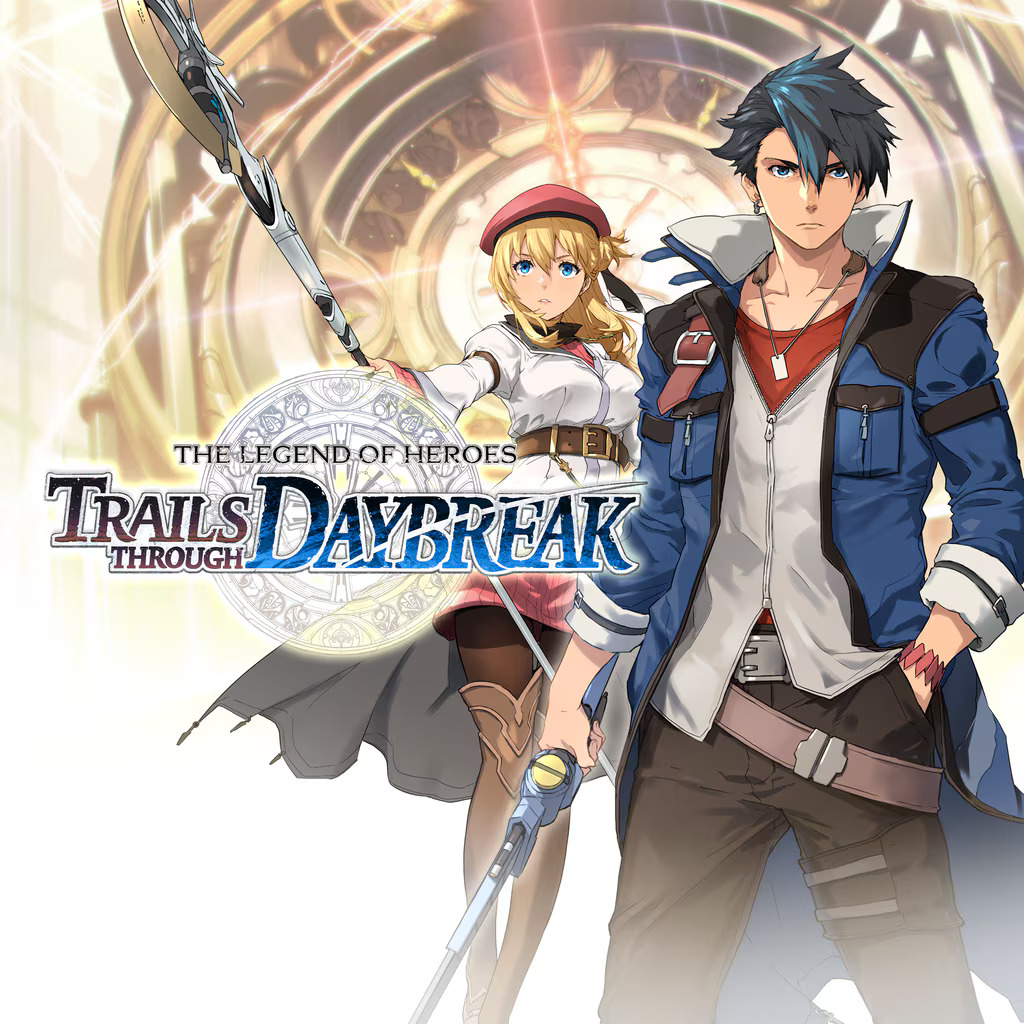
My journey with the Trails series almost stopped after Reverie. That game was packed; so much so that it lasted a little over 100 hours. I knew that these games were long, but Reverie’s length took things to an extreme for someone with my play style. So, I had to make sure I was good and ready before getting into another Trails. Fortunately for me The Legend of Heroes: Trails through Daybreak was more streamlined. A more focused plot and new gameplay features helped set it apart from the drollness of previous entries. It suffered from the usual issues that I’ll get into further in the review, but it was an overall great game.
To add, it also serves as a good starting point for those new to the series and unsure where to begin. It takes place in The Calvard Republic. In the town of Edith is an unassuming building where Arkride Solutions is headquartered. This handyman agency is run by Van Arkride; a spriggan that takes jobs from clients that don’t feel comfortable going to the Bracer Guild or the police. Instead, Van toes the lines of legality and ethics to make ends meet. On a sunny summer day, Van meets his latest client: Agnes Claudel from the Aramis Academy. Agnes asks for Van’s help in finding one of eight antique orbments called Genesis from Professor Epstein, who just so happens to be her great-grandfather. During their investigation, Van and Agnes come close to meeting an untimely end. However, a hologram named Mare materializes in front of them. She grants Van a powerful suit that transforms him into a half-man/half-beast called the Grendel. Once the dust settles, Van and Agnes realize that there might be something more connecting them to one another than a one-time retrieval job. Agnes decides to work at Arkride Solutions as a part-time employee to get the remaining the Genesis.
Trails through Daybreak has an intriguing start. It’s more than I can say for other games in the series. Most of the entries I played were “slow burns” in the story department and took far too long to get going. Things in Daybreak are more steady. The opening scenes include bloodshed, shady underlings, and the introduction of the mafia group Almata. Said mafia group is the has the main antagonists fighting against Arkride Solutions. I liked seeing the stakes established early in the game. That momentum is carried through most of the journey. As usual, some of the chapters outstay their welcome whether it’s due to overinflated dialogue scenes or the repeating of previously established information. One chapter in particular feels especially egregious when Van and his team are staying at a resort. Thankfully, the tried-and-true fast-forward and scene skip features have returned to expedite some of the tedium so players can get back to the good story moments. Personally, I feel the payoff is worth it. Learning more about Van and his ability to transform moves at a brisk pace that ends with a solid conclusion.
Van, Agnes, and the rest of the employees and personalities that work at Arkride Solutions will go through some familiar motions as they search for the Genesis and the truth. Instead of requests from the Bracer Guild or a panel that the SSS accesses, Van will get requests labeled 4SPG (for spriggans) on innocuous bulletin boards around town. Greens requests are optional. Red requests advance the story. Of course, as I’m sure folks have gathered, it’s just as important to complete as many optional 4SPGs as possible. One reason is because it rewards you with money; a problem throughout most of the game. Staying up to date with equipment and orbments seems more expensive than usual in this iteration. Finishing as many requests as possible also rewards you with Spriggan Points. Turning these in will increase Van’s ranking and yield rewards. Finally, and possibly most interestingly, many of the requests give Van a choice at the end that will increase his alignments: Law, Chaos, and Gray. By the end of the game, having one or all these maxed will add some additional story beats. I couldn’t max any of them on my first playthrough, sadly. I’m guessing that I should have kept a guide handy to make the most out of these choices. I later learned that items that could used to forge the most powerful weapons were locked behind these alignments – major bummer.
Speaking of equipment, I want to dedicate a section to one of my favorite aspects of Trails through Daybreak: shards. Weapons, armor, and accessories are important, but shards are just necessary to keep up with. Shards are often mentioned in the story and have equal importance in developing your characters. Instead of unlocking new arts, familiar orbments are placed on each character’s Xipha to unlock Shard Skills. Shard Skills add elements to attacks, prevent various status ailments, provide various follow-up and counterattacks, offer restorative abilities, and much more. When I say the options are near limitless, I mean it. Every character has their strengths in combat. With Shard Skills, you can complement those strengths or make the character more balanced. I spent plenty of time in the menu modifying my skills and orbments just to see what new skills I could unlock. For those wondering, arts are now preset in Xiphas. These can be swapped as needed, and various Art Drivers can be added to them to increase the number of accessible arts.
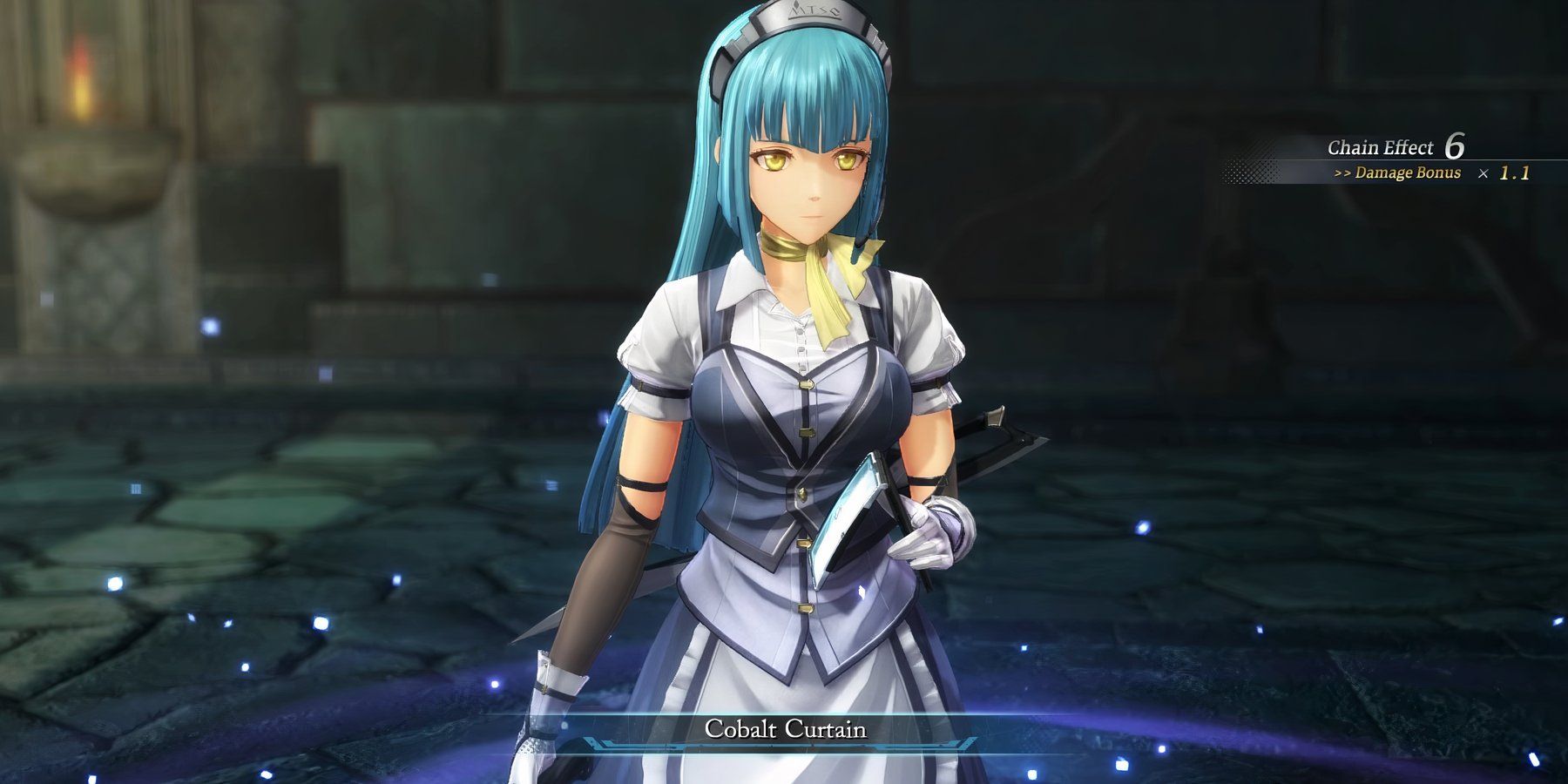
Combat is where you’ll see it all come together. Turn-based combat has returned, but there are some nifty additions. The most notable is the fact that there is button-mashing action game styled combat that can be used to weaken and stun enemies. You can attack with a combo, use a charge attack after landing enough regular hits, and dodge. It’s nothing fancy, but it works. Once an enemy is stunned, the push of a button will send your team’s shards careening towards the enemy to deal additional damage and begin regular combat. The turn order with the standard Trails turn bonuses are displayed at the top of the screen. Positioning is one of the most important things to keep in mind when it’s your party member’s turn. Staying close to other members of the team will increase the potency of attacks, crafts, and arts.
Another important thing to keep in mind is the Boost Gauge. Boosting a character will increase the likelihood of offensive shards activating. Boosting twice will allow them to use their S-Craft. Similarly, to use an S-Break, there needs to be two full meters in the Boost Gauge. The game has force feeds tutorials at players will all this and more from the start. It can feel overwhelming at first. Covering all of it in a review would feel equally overwhelming. So, I’ll just say that combat is enjoyable and feels very much improved upon since Reverie. Boss battles require more planning than the non-boss ones but that’s to be expected. I never felt underpowered while playing on the Normal level of difficulty. (Note: I played Daybreak after finishing Trails in the Sky FC’s remake. Obviously, I won’t compare the combat systems because that would be unfair.)
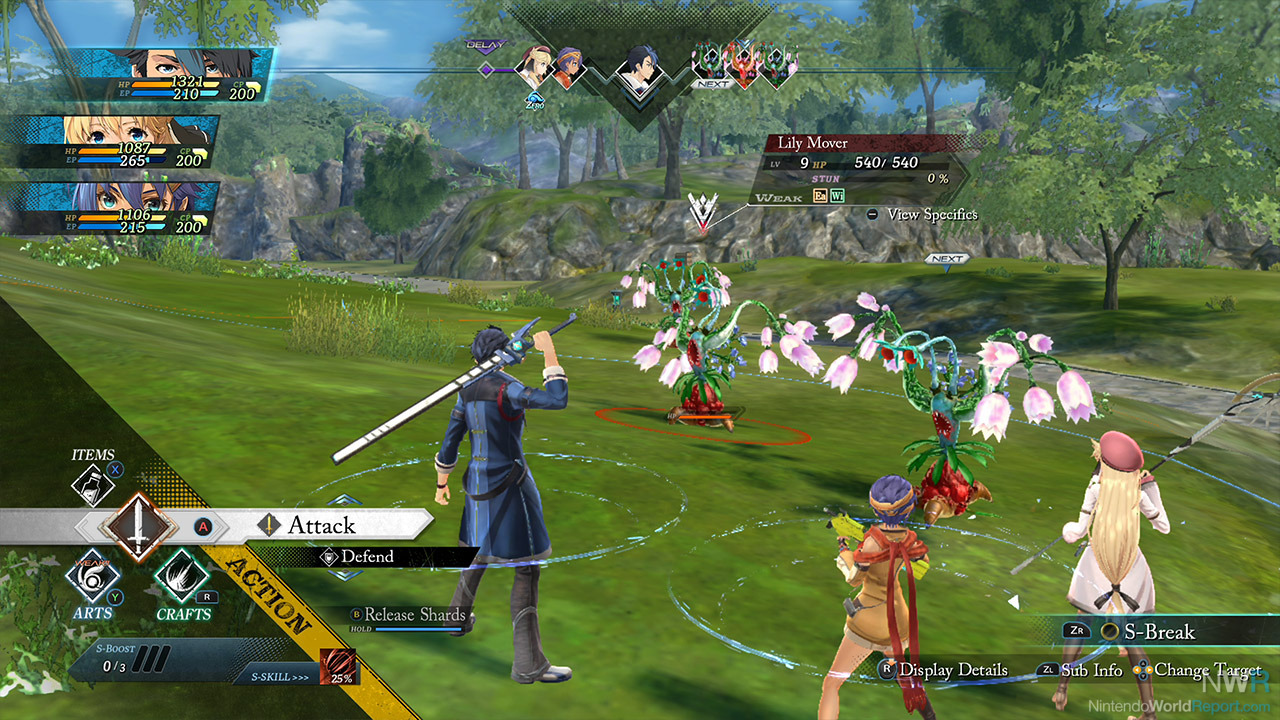
If you’ve played anything modern from Falcom, then you know what to expect with their 3D graphics. At this point, it’s generic but serviceable. It works. Arts and certain crafts look neat. The cut scenes look nice, but there aren’t many of them. Once again, I opted for the Switch version and played it on a Switch 2. In handheld mode, the text for the Shard Skills was micro-text levels of tiny and I didn’t see any way to change it in the options menu. I know that playing the Switch version means inferior framerates and crispness, but the tiny font size was something I didn’t expect. The soundtrack is great, as expected.
One of the most common complaints I saw regarding Trails through Daybreak was that it was “more of the same.” In a nutshell, the hero goes through town taking requests from people all while big and otherworldly things begin to happen behind the scenes. It’s a formula that’s been happening since the advent of all things Trails. While true, some credit should be given to Trails through Daybreak for pushing the series in a more streamlined direction. My biggest grievances with the series aren’t as pronounced, and the new features and improvements from Falcom show that the right steps are being taken. After finishing the game in about 65 hours, I’ll admit that I was curious about what the game’s sequel had in store. Personally, I don’t think anything will ever outrank the two games in the Crossbell arc. However, the first Daybreak managed to break its way into a third slot and became one of the more surprising entries I’ve played this year. If you’re a fan of the series, then you’ll know most of what you’re getting into. If you’re new to the series and don’t know where to start, then consider Trails through Daybreak. The few times the game touches on events from the past aren’t enough to cause players to lose focus from the main narrative.
Overall, 8/10: Being an employee of Arkride Solutions was a fun occupation. The Legend of Heroes: Trails through Daybreak introduces new faces, systems, and functions while trimming a layer of fat.
