






Discover and relax in Yoshi and the Mysterious Book.
September 8, 2026
Signalis popped up on my radar at just the right time. It was on the PlayStation store’s equivalent of an “fyp” a few days after I finished Crow Country. Like Crow Country, Signalis takes gamers back to a time when survival-horror games had grit, atmosphere, bleakness and jank from the late 90’s/early 00’s. Of course, this is both a blessing and a curse. The developers at rose-engine had a clear goal of what they wanted to achieve. For the first half of the game, I can confidently say that they delivered. Unfortunately, for the second half of the game and subsequent playthroughs, they flopped.
The setting of Signalis is a fascinating one. Players don’t learn all the ins and outs of it initially, so I’ll try to summarize it here because the way it’s presented in-game is with random pieces. Signalis puts you in the role of an android named Elster in a grim, steel infused world in the far future. Elster wakes up from suspended animation in a dilapidated spaceship with no recollection of how she got there or her directives. On her person is a photograph. Understanding that Elster has some connection to the human woman in the photograph (referred to as Gestalts in the game) she picks herself up and begins searching for her. The journey won’t be easy because other androids that have undergone hideous mutations are out for her.
That’s all the game starts you with; you are put in control of Elster and tasked with figuring out how to meet a girl in a photo. Fortunately, the game is linear in nature, so you won’t have to worry about wandering aimlessly. Unfortunately, the actual story requires players to piece bits of notes, posters, writings, journals, and more together for a full narrative. To this day, I don’t understand why game developers do this. What’s the point of having such a cool, eerie setting if you’re going to make us do homework to figure everything out? As gamers, we partake in this hobby to take breaks from things like homework. The scattered clues got to be so bad near the end that I ended up looking up a “story guide” online to understand things. Hot take: presenting stories like this is lazy. It’s a shame because the narrative and setting are fascinating. If they were presented better, then the story would receive top marks.
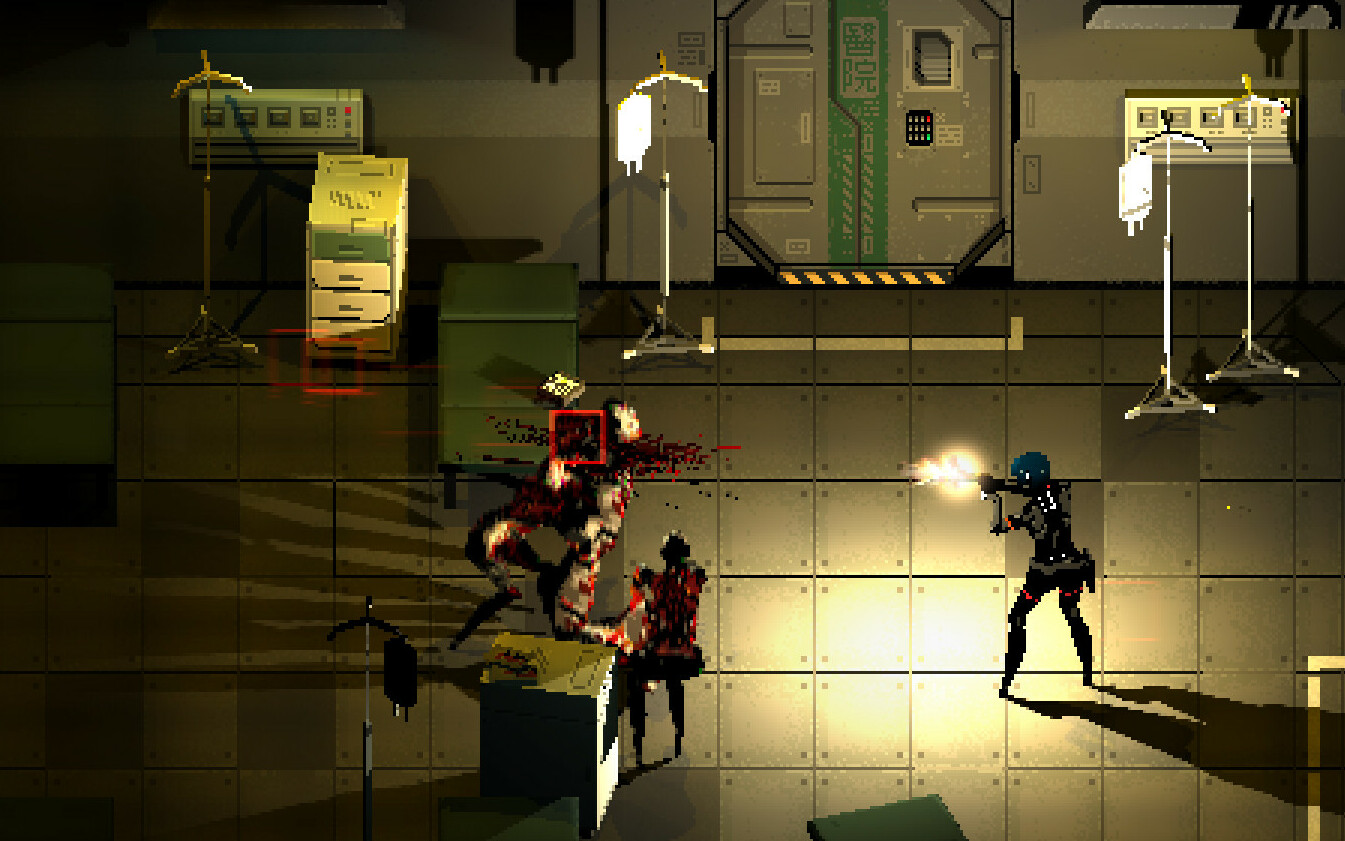
As I mentioned, the game takes inspiration from survival-horror games during the PlayStation era. You’ll move Elster through various areas solving puzzles, dealing with enemies, and picking up items. All this occurs as you dive further into the bizarre, otherworldly setting. I hate doing this but, I feel like comparing the above features to Crow Country is the only way to highlight just how poor Signalis delivered in the most important category for a survival-horror game, much less a game in general. The above three gameplay aspects in CC were great. Things are a bit different in Signalis. For the sake of fairness, I will say this: the puzzles were excellent. They were challenging, but not too challenging. They had unique ideas with equally unique solutions. Some of them required the use of an old-school radio that had to be tuned to various frequencies. Others had you combining different items to form a special tool. Which brings me to the items Elster gathers. There are guns, ammo, healing items, and the above-mentioned pieces and parts for tools. That’s great and all, but the one thing that gamers need to be aware of is inventory. Or, lack thereof. Elster’s slender frame can barely hold anything. This means constant back and forth backtracking to a save room that has a storage container. Tack on the issue of one inventory slot requiring a flashlight and you’re looking at a frustrating way to manage your things.
And of course, there’s the combat. Goodness, I’m not sure I can put into words how bad it is. All the firearms/ammo and healing items that you put into storage will need to be recovered immediately because enemies hit hard, fast, and relentlessly. The enemies look rad, and their screeches and shrieks are initially bone-chilling. Taking them out the first time is satisfying because for all intents and purposes, Elster isn’t a fighter. Her aiming is jank and gunshots lack the oomph like they did in Crow Country. After an enemy falls, you can do a finishing blow it a swift kick to the head. Alternatively, you can use an item to set them ablaze. By now, I’m sure you know where I’m going with this: enemies don’t “die” until you finish them off. And of course, the only surefire way to finish them (no pun intended) is to torch them. Kicking them while they’re down will stun them for an indefinite amount of time. So, during your inevitable backtracking, you better hope that they don’t reanimate.
The first areas Elster has to explore aren’t bad. It’s easy to have just enough ammo and healing to progress. Get halfway into the adventure and enemies are everywhere. Some of them have shields, too. Elster is not a sturdy android so she can die quickly. Oh, and the higher the damage she has the worse she’s able to move and aim. To sum up, we have fun puzzles that get downgraded by frustrating combat and item management. This ultimately means one thing: Signalis isn’t fun.
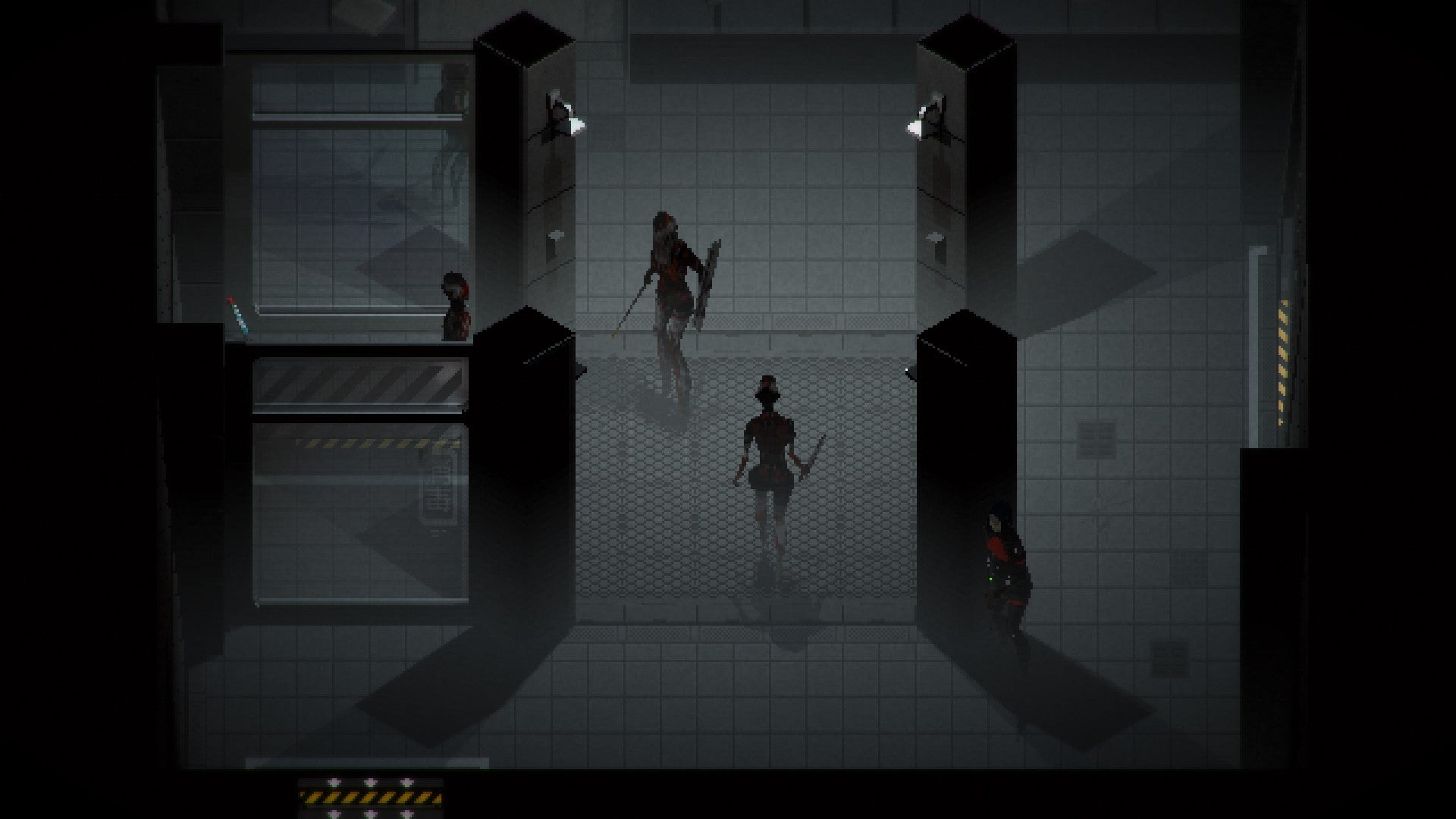
At least it looks good. While the character art looks like stuff from an angsty teen’s Deviant Art collection, the in-game graphics bring back all the nostalgic fuzzies. Areas are quiet and ambient. The hallways are dark save for emergency lighting and security cameras. Each room houses some sort of secret. The first hour or so of the game gives that foreboding sense fans of the genre enjoy and a lot of that is thanks to the environments Elster explores. Enemies shamble in unsettling ways. The screams and cries they make are intense at first. After a while, they become an annoyance because it’s a reminder that you must deal with them and/or trying to avoid them.
In the introduction, I mentioned the game missing the mark. Most of said mark was missed during the second part of the game. If you’re stubborn enough to press on, then you’ll have to endure subsequent playthroughs because the game has multiple endings; most of which can only be achieved after finishing the game the first time. One ending has especially grueling requirements. Thankfully, we live in an age where it’s easy to watch the remaining endings without having to endure the later parts of the game. They’re interesting, but it’s better to watch them instead of playing through Signalis again to see them. That’s because Signalis isn’t a good game. It might have been a good movie. Or a good novel. Or a good comic. But it’s not a good game. I can’t recommend it even to diehard fans of survival-horror. Clever puzzles and a sentimental presentation can’t make up for the game being painful to get through.
Overall, 3.5/10: Signalis has a strong start that lasts a couple of hours. Afterwards, rose-engine’s proverbial thorns start to show in a game that is a mess from every vantage point.
