






Grandia Remastered returns the incredible journey to HD.
December 26, 2025
Astro Bot combines perfect platforming with Sony’s historic game catalogue.
January 30, 2026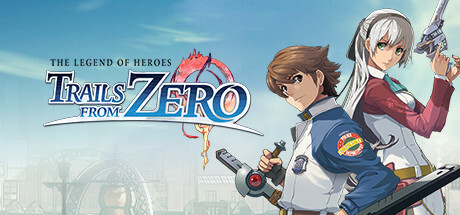
I tend to avoid anything that has to do with the Trails series. Press releases, marketing, discussions, screenshots. Anything. If Trails is brought up, then I keep it moving. As an RPG fan, one would think that I’d gobble this series and its numerous entries up. But, each entry I’ve tried did one of the worst things a game could do: it bored me. Specifically, it was when the main characters I was supposed to care about wouldn’t stop yapping. Then, we have to consider how nearly every entry would end with a “to be continued” message. After hours of gaming (and reading), you mean to tell me that the story is still incomplete? Not cool. So, why did I bother with The Legend of Heroes: Trails from Zero? Short answer: I ran a poll asking about it and one of the takeaways was that it served as a good standalone entry. It was also a lot shorter than other games in the series, clocking in at about 50 hours. I can understand why gamers recommend this entry to those that don’t want to spend thousands of hours of their life on the entire series.
Anyone can jump into Trails from Zero without prior knowledge of the franchise. Yes, there are moments where Trails in the Sky (and maybe some others – I didn’t care to find out) get mentioned/referenced, but it never takes away from this narrative. It takes place in Crossbell, a metropolitan city that reminds me a lot of the metropolitan cities IRL. There’s plenty to do, plenty to see, plenty of affluence, plenty of poverty, and a clear divide between the haves and have nots. There’re also shady politicians, corrupt brokers, a mafia, and gangs. To help with some of this, the Crossbell Police Department has its officers and agents on the scene. One of their newer departments is the Special Support Section (SSS) and is led by rookie detective Lloyd Bannings. Elie MacDowell, Tio Plato, and Randy Orlando join Lloyd to complete this new unit. Elie is the granddaughter of one Crossbell’s most prominent politicians and has decided to forge her own path by becoming a police officer. Tio is a mysterious young girl working alongside a tech company to test out new weaponry. Randy, the oldest of the four, is a womanizing ex-mercenary. The SSS was formed to compete with The Bracers Guild. So, instead of solving crimes, Lloyd and his new teammates handle odd jobs that come from random Crossbellians. I feel like it’s worth noting that Crossbell is also a “character” in Trails from Zero. You’ll be spending most of your time there, slowly uncovering its secrets. The surrounding areas you explore will have their share of drama, but all signs point back to Crossbell. Ultimately, the narrative comes together in an exciting way that feels surprisingly relevant.

I really liked the SSS. We learn about each of them at a steady, uninhibited pace. There’s little fluffy dialogue (aka “world building”) when it comes to getting to know them, their pasts, and their perspectives. I was always looking forward to the next story beat because chances are it shed more light on Crossbell and its denizens. Of course, there are times when things shift to classic Trails and drag. The third chapter is the most guilty of this. After an exciting first couple of chapters, the third chapter is a slow burn that will likely have you taking advantage of the fast-forward AND the dialogue skipping features. You can read the highlights in Lloyd’s police handbook if you’re interested. It’s also during this chapter where a slew of supporting characters are introduced. Said characters love sharing their insights and two cents. Constantly. But, again, I was able to complete the game in 50 hours so it’s not the same level of fluff one would come to expect from the series. (I’m also a fast reader and turned off voice acting so YMMV).
As mentioned, the game is divided into chapters. Each chapter tasks Lloyd and his crew with finishing an assignment. Of course, there are smaller, odd jobs that they can take care of to right the wrongs of Crossbell. You’ll move about the big city and its neighboring small towns. Crossbell will serve as your one stop shop for items, weapons, armor, accessories, and quartz. For those that are new to Trails, quartz are orbs that harness (for lack of a better term) magic. Lloyd and his team can equip a multitude of quartz that grant them access to a variety of spells. I spent a lot of time doing this because there are a lot of spells to discover. The stones provide bonuses, but seeing the various spells that become available after fully equipping a character with the right combination of quartz is rewarding. It’s a system that benefits from experimentation and allows you to customize what type of magic you want your party members to specialize in. Finally, there are the usual timewasters that can mostly be ignored: cooking, fishing, finding books, etc. There are times when you’ll have to partake in those to fulfill a side-quest (and one especially offensive moment in the story where you’re required to fish – a pox on whoever okayed that) but most of the time you can ignore the fluff. Finishing a job will boost your team’s detective rank. You’ll get rewarded each time you rank up. After finishing a story-related job, the chapter will end.
Not surprisingly, there will be opposition from monsters and mobsters. This is where the turn-based comes in. Coming into contact with an enemy starts a battle. The left side of the screen displays the turn order, as well as bonuses that will activate for whichever participant it lands on. Your team can use standard attacks, items, magic at the cost of Energy Points, and special attacks at the cost of Craft Points. There’s also an option to move around the battlefield since positioning plays an important role. Health and magic can be restored with items. Craft Points are acquired by giving and receiving damage. When characters reach at least 100 CP, they can jump the turn order to unleash their unique S-Craft as an S-Break. The maximum CP is 200, so performing an S-Craft/Break is most effective with more CP. Finishing a battle rewards you with experience, items, money, and sepith. Sepith is used to create new quartz and to upgrade the slots that hold them.

It sounds basic, but there’s something fun and strategic with Trails from Zero’s combat. For the most part, I enjoyed the combat. I played on the standard difficulty level and rarely felt like I was under leveled or in danger. Unfortunately, combat against regular mooks would go one of two ways. The first is that I would start with an advantage and the battle would be over within seconds. The second is that I’d start without that advantage and things would drag; even while holding down the fast-forward button. Enemies have too much HP. For a boss battle, that’s fine since these are where you’d use all your abilities and strategic know-how to emerge victorious. For a regular battle where enemies constantly respawn, however? Not so much. In a non-Trails RPG, you could at least cast your best spell and nuke the scrubs. But, in the Trails series, spells take at least one turn to charge. Just for the sake of time, it’s best to always try to gain the initiative in regular combat.
One of my favorite things about Trails from Zero is the presentation. I played the Switch version on my Switch 2 and the game had the crispiest, brightest display whether docked or handheld. Character art is clean and varied, and their accompanying sprites are vivid. If you’re one of the few that played a non-Trails iteration of The Legend of Heroes games on the PSP, then think of those sprites but amplified. These, along with anime-inspired special attacks and spells, a variety of enemy designs, and some beautiful locations make this game quite the looker. Crossbell, for all its corruption, is great to look at. You’d never guess it had so much shadiness based on outward appearances. The music, courtesy of Falcom, delivers exactly what you’d expect. I had the story voices off but kept the battle voices on. The game only has Japanese voice acting, which surprised me considering how Caucasian of a setting Crossbell and the entire Trails universe is. (I’m fully aware that it was developed in Japan. It’s just funny seeing someone named Randy Orlando have his spoken text read one way and his Japanese voice-over sounding another.)
Obviously, my play time was lessened because I skipped the fluffy dialogue during side-quests and didn’t chat with every NPC I came across. Hence, my playtime rounding to 50 hours. However, those that want the full Trails from Zero experience will likely log 90 to 100 hours into it. This game goes hard with its text. I can see why people can spend hours on end with it. As for me, getting to the good stuff was enough. The ending left one semi-important question unanswered but like I mentioned in the introduction, Trails from Zero serves as an excellent standalone entry in the series. Will I play its follow-up titled Trails to Azure? I’m not sure. But, I’m glad that I finally found a game in the series worth seeing to completion. I know there are RPG fans out there that oftentimes feel unsure where to begin with the series and don’t know which ones are worth the time. I’m right there with you, and I can fully recommend Trails from Zero.
Overall, 7.5/10: Despite some sluggish moments and filler aplenty, The Legend of Heroes: Trails from Zero does what’s needed as a fun RPG.
