




Most gamers won’t move aside for Lost Soul Aside.
October 13, 2025
Ninja Gaiden: Ragebound has nary a rage-quit in sight.
November 22, 2025
My favorite survival-horror series is Fatal Frame. It packages so many interesting ideas and favorite concepts, all wrapped up with a horrifying bow. Fatal Frame combines haunting atmosphere, Japanese mythology, modern Japanese settings, and horrifying enemies. So, during my time with Silent Hill f, I couldn’t help but wonder if the “f” stood for “fatal” or “frame”. I’m half-joking because like my favorite series, Silent Hill f has: haunting atmosphere, Japanese mythology, modern (ish – it takes place in the 1960’s) Japanese settings, and horrifying enemies. It has so much more, too. I floundered back and forth on whether I was going to get this day one or wait until an inevitable price drop. I’m glad I bit the bullet and picked it up early because it was perfect for the recent spooky season and just a great game all around. I highly recommend it to all fans of survival-horror regardless of your familiarity with Silent Hill, or Fatal Frame for that matter.
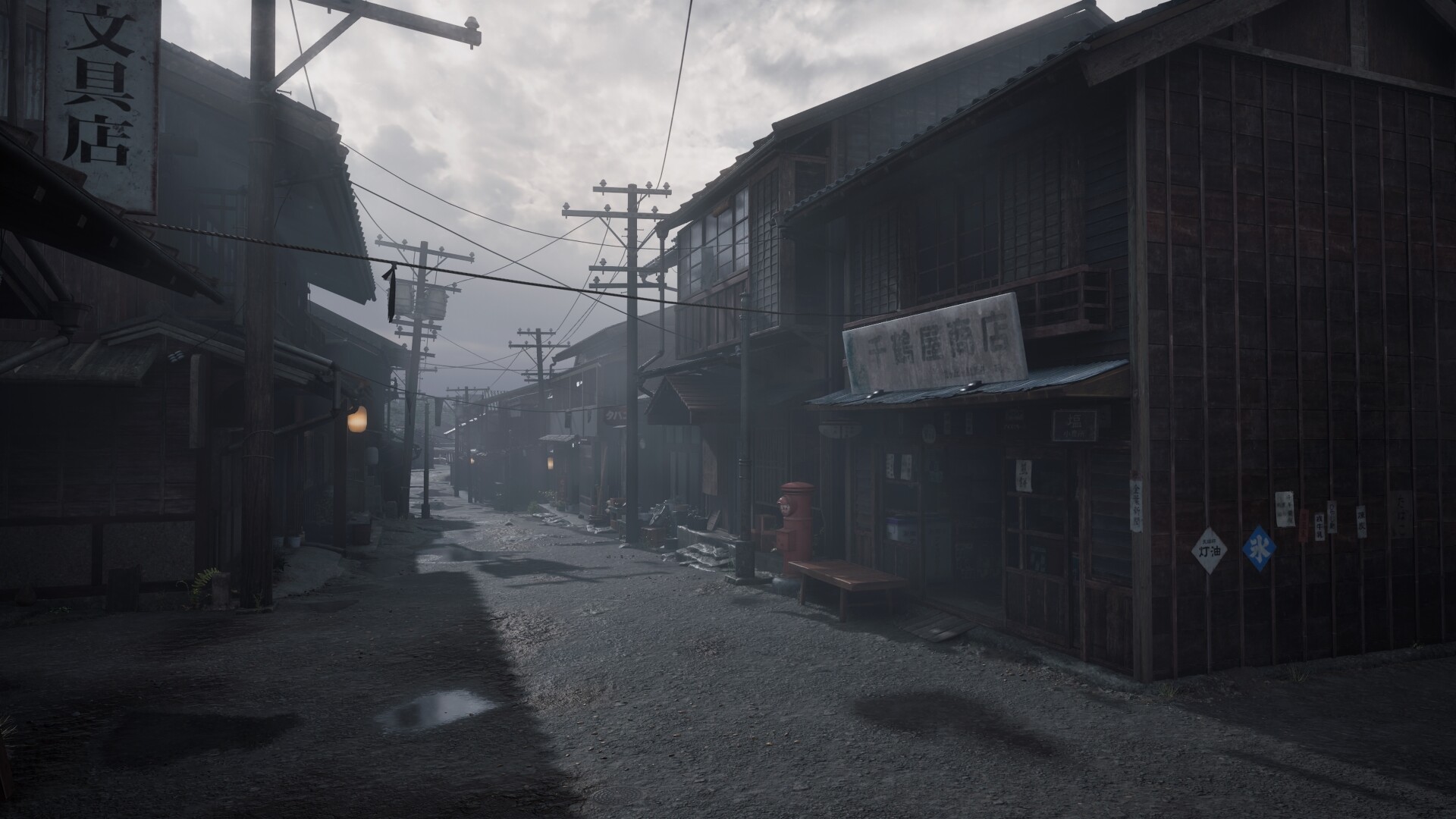
If you’re familiar with the series, then you might be confused about it being set in Japan during the 1960’s. Where’s the titular town we all know and fear? The town of Ebisugaoka is not Silent Hill, but its themes and nuances offer connections. The town is covered in fog, the town is heavily isolated since the only way out of it is a bridge, static radios are placed in questionable areas, the town looks like it’s been abandoned, and there are some creepy religious customs. Essentially, you’re in a parallel version of Silent Hill that does all the things Silent Hill does. It’s unsettling, eerie, atmospheric, and exciting to explore.
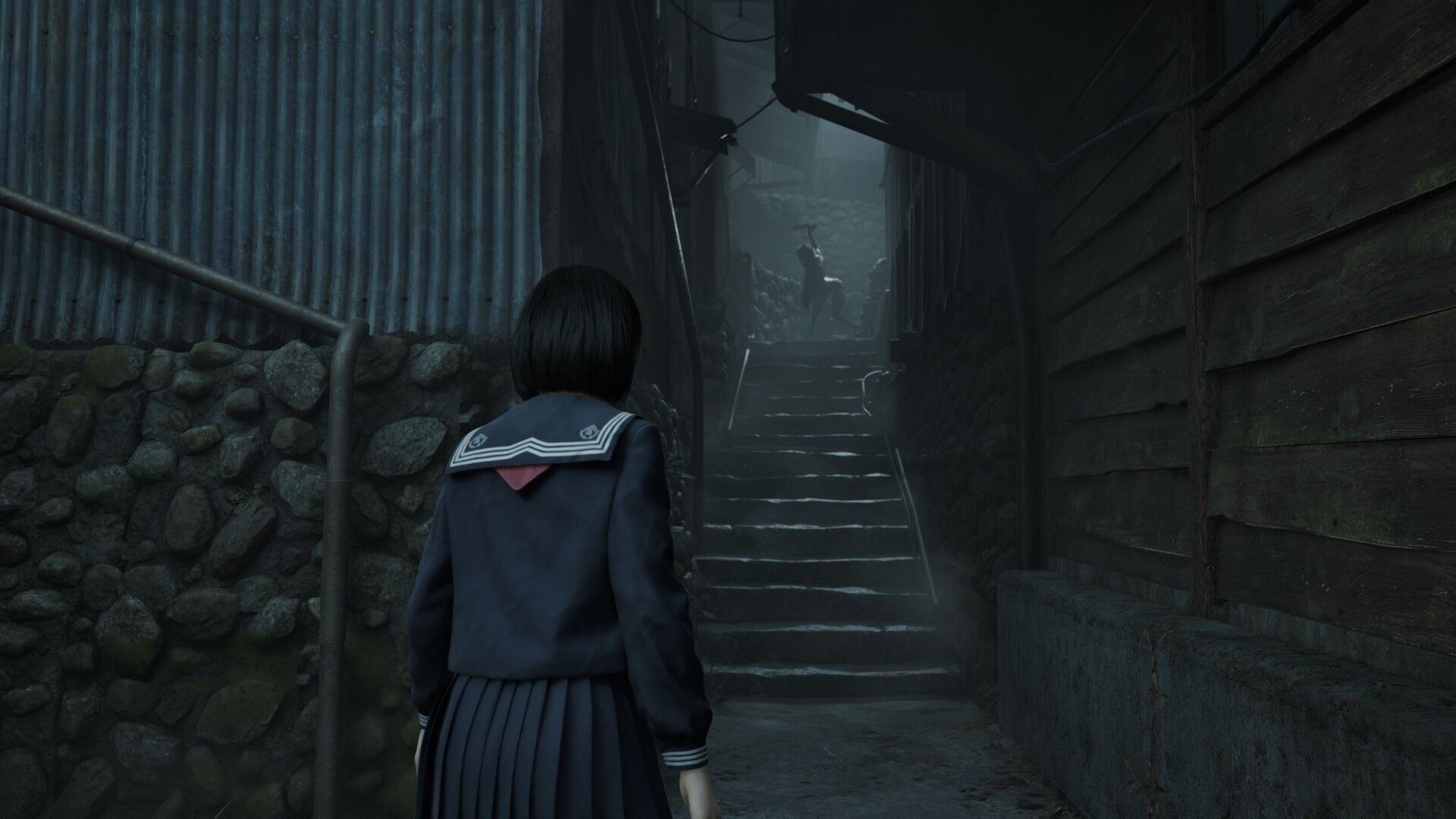
Exploring this town, the very same town she calls home, is protagonist Hinako Shimizu. She’ll be the first to tell you that she’s just an average girl with nothing remarkable about her aside from being a bit taller than most girls. I completely disagree. Not only because I like her as a protagonist, but because I think the creators did a great job making her relatable. Hinako is disgruntled with her small-town life and, after yet another argument with her parents, leaves her house to meet some friends. One of her good friends is Sakuko. She often refers to Hinako as a “traitor.” On the surface, being branded a traitor is because Hinako would prefer to hang with the boys instead of the girls. Hinako’s progressive views on gender roles are often scoffed at and shunned by her peers. The only person that feels differently is Hinako’s best friend, Shu. He refers to Hinako as “partner” because he views her as an equal. Of course, there’s more than meets the eye with her being branded a traitor. This will get explored as she simultaneously begins a horrific journey through her town. It doesn’t take long for Hinako’s day to go from regular to terrifying.
As much as I want to, I won’t get into the details as to what and how Ebisugaoka turns into a town of terror. I’ll just say Hinako bravely goes through it both literally and metaphorically. Silent Hill f’s story combines the stuff I mentioned above with a heaping dosage of psychological terror. Something that I really appreciate is that Hinako keeps a journal of everything she encounters: people, events, history, monsters, and anything else that comes into her purview. You’ll uncover documents and clippings as per usual, and in doing so, Hinako will often make updates to her journal. I liked how detailed this was, because in game’s past it’s easy to forget certain, little things that played a role in the overall plot. It’s enjoyable seeing the story unfold in real time, but having Hinako’s journal (with accompanying pictures) quickly accessible is equally great.
Said journal also keeps track of hints for puzzles. The puzzles in Silent Hill f are true mind-benders, even on their lowest difficult. It took me a while to figure out a good chunk of them. One of them had me give in and look up a solution guide. There are three puzzle difficulties to select at the start of the game. Similarly, there are three combat difficulties that can be selected. This brings me to the combat; an aspect of the game where my opinion fluctuates. It’s more involved and has more to keep track of than other entries, but on the flipside, it also can feel like a hassle. Hinkao has a health bar, a stamina bar (that’s green colored because of course it is) and a sanity bar. Swinging weapons and running when enemies are around depletes stamina. Dodging also depletes stamina, but if you time your dodge right, then Hinako will perform a perfect dodge that automatically replenishes her entire stamina meter. She can also focus, which lets her ready a strong attack that costs both sanity and stamina to execute. If she runs out of sanity, then she takes more damage, and her health will start to drain. There are also counterattacks, weak attacks, and strong attacks. Indeed, it sounds like Hinako’s journey is from a Souls-like.
Thankfully, it’s not. Still, keeping track of everything when enemies start to appear more frequently can get to be a bit much. At the start of the game, Hinako’s options are limited and she’s better off running from fiends. Near the end of the journey, you’ll be forced to fight. Combat can feel satisfying and visceral, but there are some glaring issues. The first is weapon durability. She can only hold up to three weapons a time, too. The camera usually behaves, but when it gets crowded in certain corridors, locking onto an enemy is a surefire way to get discombobulated. The biggest issue is inventory. Hinako’s limited space for healing items cannot be overstated. A small saving grace to this occurs at Hokora Shrines. These act as save points, but they also allow you to exchange certain items for Faith. With Faith, you can upgrade Hinako’s stats. You can also draw a random Omamori; charms that provide extra benefits and boosts to Hinako. Some of these can be discovered throughout the game, but most of them come from the shrine. Since enemies are tough and spongey, she’ll need all the help she can get even on the lowest difficulty level.
These enemies, along with the environments and supporting characters, look wonderful. Squelchy and wonderful. Silent Hill f is a graphical freak show in the best way possible. The series rarely shies away from the shocking and the gruesome, and Silent Hill f is no exception. Fans of Japanese horror will be extra delighted. The sound and music are also worth noting. The music is creepy and eerie, but my favorite “music” is silence. There is a palpable level of impending fear that occurs more than once in Silent Hill f because Hinako is in an empty, abandoned area and the player isn’t hearing anything but her breath and footsteps. You know something is about to go down, but you don’t know when, how, or what. All this to say, Silent Hill f is an audio and visual tour de force.
It shouldn’t take long for players to realize that there’s a lot to uncover. Like other games in the series, Silent Hill f has multiple secrets and endings that paint a full picture of what’s going in Ebisugaoka. The first time through, players are locked into one ending. This should take about 15 hours at most to finish. Subsequent playthroughs and New Game Pluses offer chunks of new content that make it easy to hop right back into the terror. When everything was experienced, my time was close to 30 hours. To me, that’s a lot of content. I think by now you realize that I recommend Silent Hill f. I’m not sure why this entry has caused such a divide in gamers. Aside from capricious combat and limited inventory space, there’s a lot of neat and scary stuff for fans to enjoy. Often divisive for not being in the titular town, I think Silent Hill f stands perfectly alongside the other entries.
Overall, 9/10: The newest entry of Silent Hill takes place in…Japan? In the 1960’s? Yes, and it’s one of the better entries out there as a result.
